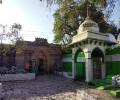
The Madhya Pradesh government has challenged the legal validity of a 1935 order from the former Dhar princely state concerning the religious status of the Bhojshala Temple-Kamal Maula Mosque, arguing it cannot be considered law.

The Trinamool Congress (TMC) has announced a 60-day mass outreach program targeting Scheduled Caste and Scheduled Tribe-majority assembly constituencies in West Bengal, accusing the BJP of depriving the state of funds and disrespecting marginalized communities.

What is missing in the BJP's armour is dominance over 50 percent of the electorate: Women. And this is a gamble Modi-Shah have indicated that they are willing to take, explains Saisuresh Sivaswamy.

The Supreme Court has rejected a petition seeking to prevent the construction of mosques named after Mughal emperor Babur.
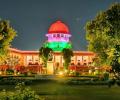
The Supreme Court has agreed to list for final hearing the pleas challenging the validity of certain provisions of the Places of Worship (Special Provisions) Act, 1991.
Jamiat chief Maulana Arshad Madani said they took the decision following extensive deliberations involving lawyers and experts.

The man accused of attacking Delhi Chief Minister Rekha Gupta told investigators he planned a protest against the Supreme Court's order on relocating stray dogs, similar to Anna Hazare's anti-corruption protests.

A five-judge Constitution Bench headed by Chief Justice Ranjan Gogoi said that even if one per cent chance of mediation exists in the politically sensitive land dispute matter, it should be done.

The CPI-M on Friday said it was "inexplicable" why the Supreme Court stayed by a week the Ayodhya title suit verdict as the matter could not be settled out of court.

The year began with Ayodhya getting ready for the Ram temple consecration ceremony. Almost four months later, the excitement has settled down and some voters are crediting the Bharatiya Janata Party for fulfilling its promise while others feel that development should reach every corner of the district.
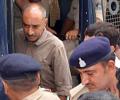
The Supreme Court of India has dismissed the bail plea of former IPS officer Sanjiv Bhatt, who was convicted and sentenced to life imprisonment in a 1990 custodial death case. The court ruled that there was no merit in his plea for bail or suspension of sentence. Bhatt, along with co-accused Pravinsinh Zala, was found guilty of murder, voluntarily causing hurt, and criminal intimidation by the Gujarat High Court in 2024. The case stems from the death of Prabhudas Vaishnani, who was detained by Bhatt following a communal riot in Jamjodhpur in 1990. Vaishnani's brother alleged that Bhatt and other police officers tortured him in custody, leading to his death.
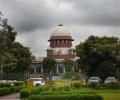
The Supreme Court on Tuesday dismissed the argument that a three-judge bench, rather than a two-judge bench, should hear appeals of convicts in the 2002 Godhra train burning case. The court found that the Gujarat High Court commuted the death penalty to life imprisonment, therefore not requiring a three-judge bench. The hearing of the appeals will continue on Wednesday, with the state government seeking restoration of the death sentences of 11 convicts.
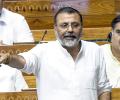
Fourth-term Bharatiya Janata Party MP Nishikant Dubey, one of the more vocal party members in the Lok Sabha, launched a broadside against the Supreme Court on Saturday, saying Parliament and state assemblies should be closed down if the apex court has to make the laws.
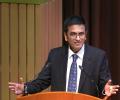
Besides the present CJI Chandrachud, former CJIs Ranjan Gogoi and SA Bobde and former judges Ashok Bhushan and S Abdul Nazeer were part of the bench which had delivered the historic verdict on November 9, 2019.
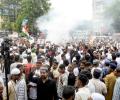
Congress MP Mohammad Jawed and AIMIM president Asaduddin Owaisi have challenged the validity of the Waqf (Amendment) Bill, 2025 in the Supreme Court, arguing that it violates constitutional provisions. The petitions claim the bill imposes arbitrary restrictions on Waqf properties and their management, undermining the religious autonomy of the Muslim community. They also allege that the bill discriminates against Muslims by imposing restrictions not present in the governance of other religious endowments. The bill was passed in the Rajya Sabha and Lok Sabha, with the petitioners arguing that it introduces limitations on the creation of Waqfs based on the duration of one's religious practice, mandates inclusion of non-Muslim members in Waqf administrative bodies, and shifts key administrative functions to government officials, thereby diluting the autonomy of Waqf management.
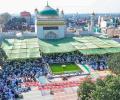
The law prohibits conversion of any place of worship and provides for the maintenance of the religious character of any place of worship as it existed on August 15, 1947.

The apex court said the parties in the matter should be ready to start the hearing on the appeals which are before it.

Senior advocate Rajeev Dhavan, representing the Muslim parties in the case, tore up a pictorial map.
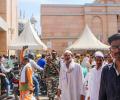
The Act prohibits conversion of any place of worship and provides for the maintenance of the religious character of any place of worship as it existed on August 15, 1947.
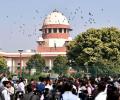
A bench comprising Chief Justice Sanjiv Khanna and Justice Sanjay Kumar also indicated that it may not take up the pending scheduled petitions, heard earlier by a three-judge bench, during the day as it was sitting in a combination of two judges.
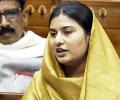
Samajwadi Party leader and Kairana MP Iqra Choudhary has moved the Supreme Court seeking effective implementation of the Places of Worship (Special Provisions) Act, 1991. This move comes amidst several petitions challenging the law's validity, including those filed by the Akhil Bhartiya Sant Samiti and lawyer Ashwini Upadhyay. The Supreme Court, in December 2022, had restrained all courts from examining fresh suits and passing interim orders in pending cases seeking to reclaim religious places. The Act aims to maintain the religious character of places of worship as they existed on August 15, 1947, but the dispute relating to Ram Janmabhoomi-Babri Masjid at Ayodhya was kept out of its purview. The court has listed Choudhary's plea with other pending pleas for February 17.
The Mathura Shahi Masjid Eidgah Committee has approached the Supreme Court, requesting the court to prevent the central government from filing a response to a petition challenging the Places of Worship Act's constitutional validity. The committee accuses the BJP-led government of intentionally delaying its response. The court had previously issued a notice to the government in March 2021, but the government has yet to submit its reply despite numerous opportunities. The committee argues that the government's delay is intended to obstruct those opposing the challenge to the Places of Worship Act from filing their own responses. The petition also states that the pleas challenging the law's validity are scheduled for hearing on February 17, and closing the government's right to respond would serve justice. The Supreme Court previously issued a ruling in December 2022 that stopped courts from entertaining new lawsuits or issuing interim or final orders regarding the reclaiming of religious places, particularly mosques and dargahs. The ruling halted proceedings in 18 lawsuits filed by Hindu groups seeking surveys to confirm the original religious character of 10 mosques, including the Gyanvapi Masjid in Varanasi, the Shahi Idgah Masjid in Mathura, and the Shahi Jama Masjid in Sambhal. This decision was made in response to six petitions, including one filed by lawyer Ashwini Upadhyay, challenging various provisions of the Places of Worship Act. The 1991 law prohibits the conversion of places of worship and guarantees the preservation of their existing religious character as it stood on August 15, 1947. Notably, the dispute regarding the Ram Janmabhoomi-Babri Masjid in Ayodhya was excluded from this law. There are also several cross-petitions advocating for a strict enforcement of the 1991 law to uphold communal harmony and maintain the current status of mosques that Hindu groups seek to reclaim, claiming they were temples before being destroyed by invaders.
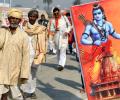
The Congress' attack came after the Ayodhya Development Authority accused 40 people, including the City mayor, a local BJP MLA and a former party legislator, of illegally trading plots and building infrastructure there.

'With Ramaland, the tourism department is looking to attract children and adults alike. It'll be learning with entertainment.'
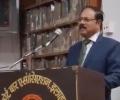
Allahabad High Court judge Justice Shekhar Yadav, who was embroiled in controversy for his speech at a VHP event in December, has opted out of a seminar on the Ram temple movement in the Kumbh Mela area on January 22. Yadav was scheduled to deliver the keynote address at the seminar, which is being held to mark the first anniversary of the consecration ceremony of Lord Ram Lalla in the Ayodhya temple.

The apex court said when a particular structure is chosen all of a sudden for demolition and the rest of similarly situated structures in the same vicinity are not even being touched, "mala fide may loom large".

The BJP had registered a one-sided victory on all the 17 SC-reserved seats in the 2014 Lok Sabha elections. But in 2019, out of these 17 seats, it lost Nagina and Lalganj seats to the Bahujan Samaj Party.
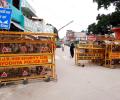
Unlike in the past, the Vishwa Hindu Parishad is not celebrating any "Shaurya Diwas" (Bravery Day) on Tuesday and there are no plans by the Muslim community to observe a "Black Day".
Commencing hearing on pleas challenging the constitutionality of the Places of Worship Act, 1991, the Supreme Court asked the Centre to reply to cross-pleas against or seeking implementation of statute.
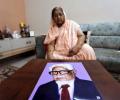
Zakia Jafri, the wife of former Congress MP Ehsan Jafri who was killed in the 2002 Gujarat riots, died on Saturday in Ahmedabad at the age of 86. Ehsan Jafri was among 69 persons who were killed inside Gulbarg Society, a Muslim neighbourhood in Ahmedabad, on February 28, 2002, a day after coaches of the Sabarmati Express train were burnt in Godhra, resulting in the deaths of 59 'karsevaks' returning from Ayodhya. The incident triggered horrific rioting across the state. Zakia Jafri hit the national headlines as she waged a legal battle all the way to the Supreme Court in a bid to hold top political leaders accountable for the large conspiracy for the riots post the Godhra train burning episode. Her son Tanveer Jafri said that his mother was visiting his sister's house in Ahmedabad when she complained of feeling uneasy. The doctor who was called in declared her dead at around 11:30 am. Social activist Teesta Setalvad, who was co-complainant in Jafri's protest petition in the Supreme Court, posted on X that Zakia Jafri was a compassionate leader of the human rights community.
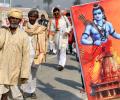
Gandhi dismissed as an "eyewash" the probe into what she called as Ayodhya land 'scam' in areas around the proposed Ram temple while Mayawati demanded that the state government cancel the land deals if the allegations in a media report on the issue are true.
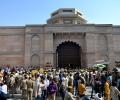
The Supreme Court of India is scheduled to hear a batch of petitions challenging the validity of certain provisions of the Places of Worship (Special Provisions) Act, 1991, which prohibits lawsuits to reclaim a place of worship or change its character from what prevailed on August 15, 1947. The pleas, including one filed by Ashwini Upadhyay, argue that these provisions violate the right to judicial remedy and create an arbitrary cut-off date. The matter will be heard in the backdrop of several ongoing cases related to places of worship, including the Gyanvapi Mosque in Varanasi and the Shahi Idgah Mosque in Mathura. The Muslim side has cited the 1991 law to argue that such suits are not maintainable. The Supreme Court had previously sought the Centre's response to Upadhyay's petition, which alleged that the law creates an "arbitrary and irrational retrospective cut-off date" for maintaining the character of places of worship.
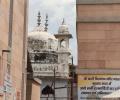
The Supreme Court's 2023 order refusing to stay a scientific survey at the Gyanvapi Mosque complex has sparked claims over several other disputed places of worship across India. This has led to several court cases, including one in Mathura where a survey of the Shahi Idgah Mosque complex was ordered, and another in Ajmer where a claim was made that a Shiva temple existed within the dargah of Sufi saint Moinuddin Chishti. The article also highlights a dispute over the Bhojshala in Madhya Pradesh, which Hindus consider a temple and Muslims consider a mosque. The Supreme Court's order has reignited debates about the Places of Worship (Special Provisions) Act, 1991, which prohibits the change of character of religious places as they existed on August 15, 1947.

Justice Chandrachud also dealt with questions about criticism by eminent lawyers on the allocation of cases to particular judges and 'bench hunting', and said the allocation of cases is not "lawyer-driven" and vowed to maintain the credibility of the institution of the Supreme Court.
The Supreme Court on Tuesday refused to interfere with the criminal proceedings in cases relating to the demolition of disputed structure at Ayodhya in which the trial involving senior Bharatiya Janata Party leader L K Advani and seven others VVIPs were segregated from others.
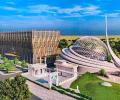
But three years after the apex court settled the Ram Janmabhoomi-Babri Masjid land dispute, there are no signs of any building activity on the proposed mosque site.

The Supreme Court on Monday took strong note of former Chief Justice of India Ranjan Gogoi being made a party to a PIL and seeking of an in-house inquiry against him for dismissing a plea earlier related to a service dispute.
In an unusual coincidence, the two judges of a Supreme Court bench hearing a plea against the survey of the Gyanvapi-Shringar Gauri complex in Varanasi have had an association with a similar kind of dispute relating to the Ram Janmabhoomi-Babri masjid issue as well.
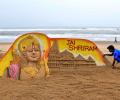
The following is the chronology of events related to the Ram Janmabhoomi-Babri Masjid land dispute in which, after the Supreme Court verdict, Prime Minister Narendra Modi on Wednesday conducted the 'Bhoomi Pujan' or ground breaking ceremony and laid the foundation stone for the temple's construction.

The Delhi government also advised all private schools to remain closed on November 9 as a precautionary measure in view of the verdict.
 © 2026 Rediff.com - Advertise with us - Disclaimer - Privacy Policy - Sitemap - Feedback - About us - Terms of use - Grievances